
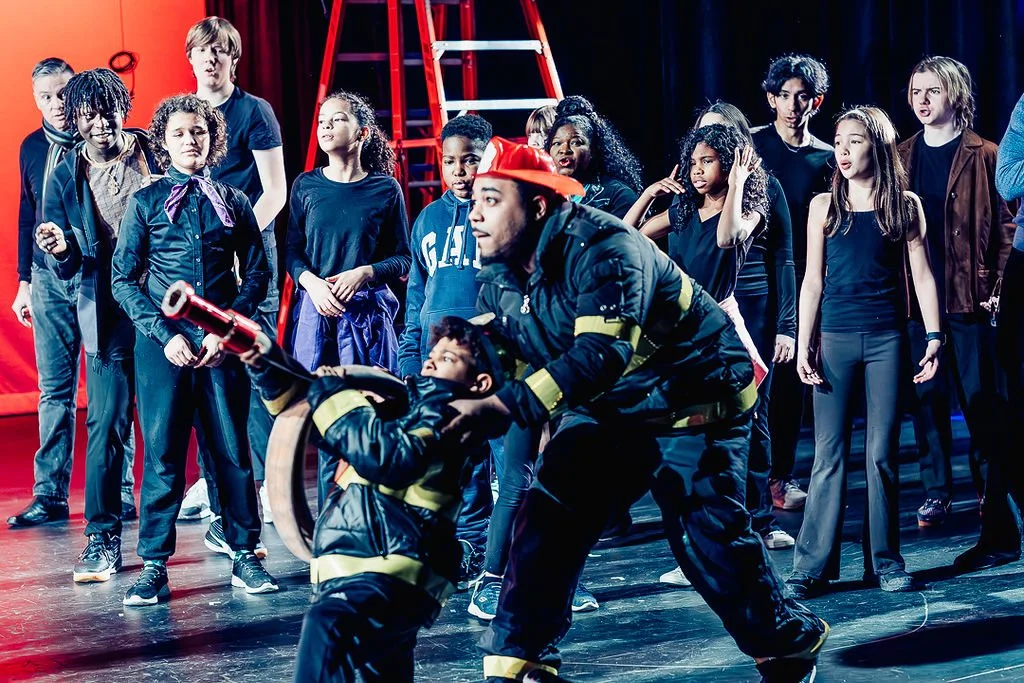
At Creative Stage Collective, we don’t just make theater for children—we make it with them. Too often dismissed as “just for kids,” theater created alongside children is serious, sharp, and essential—offering healing for a fractured world.
About eight years ago, I remember devising a Creative Stage Collective (CSC) sketch set at a “women’s empowerment conference.” The twist? Every panelist was a Disney heroine.
As a child of the ’70s, I grew up with Snow White and Cinderella. We dress our daughters as Ariel and Belle for Halloween without much thought. But the longer our devising group explored the idea of “empowered” princesses, the more obvious it became: none of them were actually empowered at all.
That’s how one of CSC’s most beloved sketches was born. It wasn’t just laugh-out-loud funny—it was a razor-sharp critique of how adults often become blind to the cultural shifts around them. And it didn’t come from a dramaturg’s research. It came from a group of fourth graders’ offhand observations.
At CSC, we don’t simply make shows for children—we make theater with them. And the results are consistently hilarious, moving, unexpected, and—perhaps most importantly—vital.
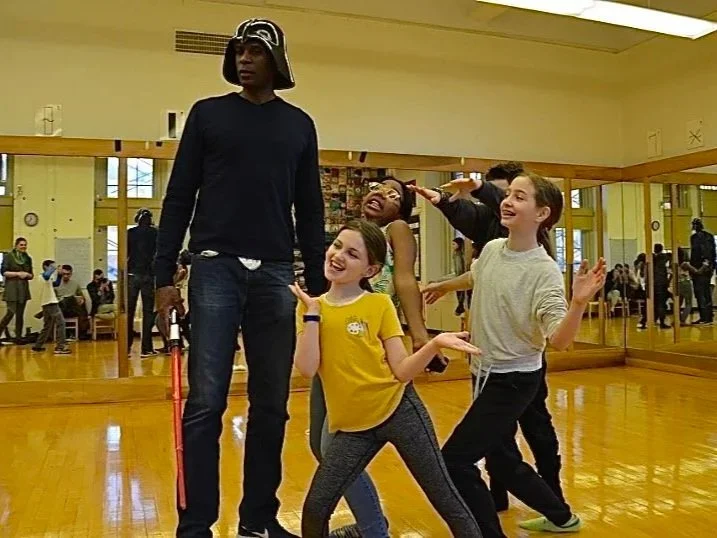
Children Help Us See the World Differently—And We Need To
Over the past 11 years creating with young people, I’ve learned this: childhood imagination carries with it a treasure trove of untapped power
Children expose the absurdities we’ve come to accept as normal. They question hierarchy, time, fairness, logic, gender norms, and more—not out of rebellion, but because their worldview isn’t yet limited by the rules our adult society has collectively agreed to live by.
At CSC, we have one unbreakable rule: no adult who wasn’t in the room can write a scene for our productions. This protects the integrity of the youth voice and keeps their creative perspective front and center.
That’s how a casual conversation about oat milk vs. whole milk turned into a dating game parody sketch, where the contestant finally declares, “I’m choosing myself!” It’s how Avoiderol—a faux medication for dodging unwanted social obligations, “so you can just stay home and take a nap”—was born. And our CSC audiences will never forget Eddy the Flying Iguana, the Chicken Volcano, Barbie on the Starship Enterprise, or Cheese Shoes (“Try the parmesan loafers—comfy support for the insoles, and also tastes great grated over pasta with red sauce”). These are just a few of the myriad off-the-wall ideas that no adult could possibly have come up with alone.

Why Kids Can’t Do It Alone
But, let’s be honest: as lovely and lofty it might sound to elevate the voices of children, the fact is, kids haven’t got a clue how to put on a show on their own. Even if they could, quite frankly, it would be an incomprehensible mess—anyone who’s sat through a school performance knows how excruciating it can be. So let me assure you, completely handing over the creative reins to kids is not what we do at CSC.
Becoming a professional artist requires years of training and experience—to write a tight script, hit a high C, deliver dialogue with comic timing, arrange a parody song, play an instrument, or dance with precision. All of these skills demand rigor, discipline, and time.
We need skilled adult artists to bring their expertise to the party for this equation to work. The adults in our troupe help amplify children’s ideas in a true collaboration. It’s a delicate balance to knit the two. But together, something powerful is created.
The next question might be - why do they do it?
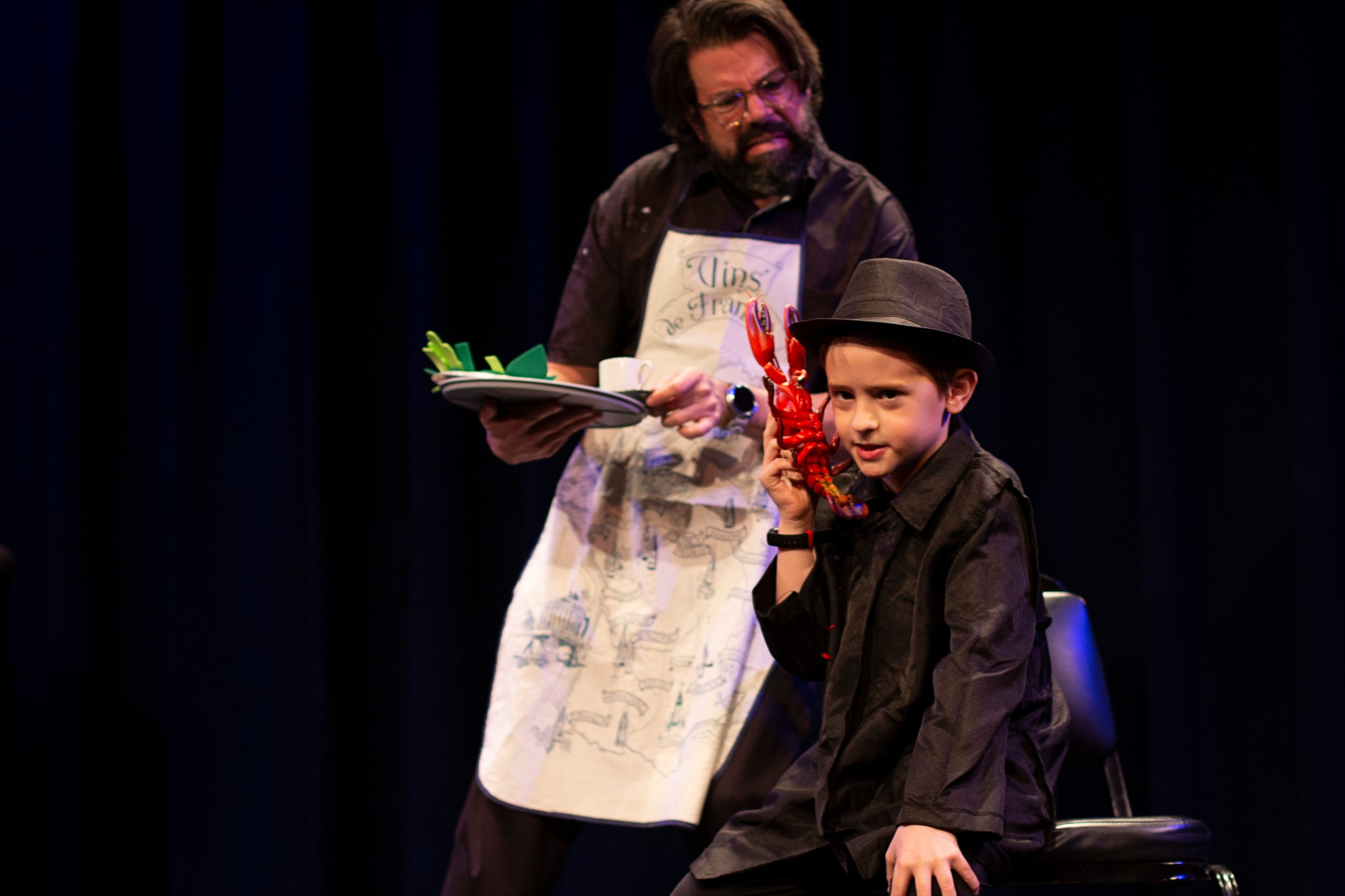
Professional Artists Need This, Too
Our adult collaborators at CSC often describe the process as deeply renewing—but also revealing. To collaborate with children takes more than patience. It requires a close examination of why the things that work, work.
I see this happen all the time. Our adult artists step into a CSC rehearsal room—arriving beautifully prepared, bringing the same level of focus they would for a debut at the Met or on a Broadway stage. (After all, that kind of serious attention to craft is what brought them to the top of their careers in the first place).
That professionalism doesn’t disappear just because they’re working with young people. In fact, the kids see it, absorb it, and rise to meet it. The professionalism is contagious.
But something else happens, too. It’s a two-way exchange.
While our professional artists maintain their excellence, they also rediscover a joyful spontaneity they tell us they haven’t felt in years. They reconnect with the spark that led them to their art form in the first place, embrace a little bit of kid-chaos, and—almost inevitably—find themselves addicted to the process.
It can even be healing.
I once asked one of our performers—a soprano who sang Madama Butterfly with the Met Opera—why she keeps doing this work. Her answer?
“Because it’s fun.”
The fun is what makes it powerful.
We Need Intergenerational Spaces to Heal Our Communities
Beyond artistic innovation, something deeper is happening. In an increasingly fragmented and isolating world, CSC has accidentally uncovered a kind of antidote.
According to Gallup, there has been a 10‑percentage‑point drop since 2020 in attendance—whether at church, synagogue, mosque, temple, or other communal practice-- reflecting a steady decline in shared, intergenerational gathering spaces. Meanwhile, family and neighborhood connections are fraying. A recent American Psychological Association (APA) poll found that 30% of adults report feeling lonely at least once a week, with 10% feeling lonely every day. Loneliness is rising across all age groups.
Everyone seems to be in a different room, staring at a different screen.
At CSC, we didn’t set out to fix that. We stumbled into it—organically. But what we’ve created is powerful.
We offer joyful, creative spaces where people of all ages collaborate, connect, and see each other, and where audiences of all ages can gather to experience our performances. No lectures. No think tanks. Just real human interaction forged through storytelling and play.
And the impact? It’s palpable.
This Is a Revolution—And We Need to Take It Seriously
Too often, multigenerational theater is seen as “friends and family” fare—heartwarming, yes, but not “serious” art. It’s perceived as educational, amateur, peripheral.
But if we’re serious about innovation, about empathy, about making theater that matters in this complicated world, then we must elevate childhood imagination—not relegate it to the sidelines, dumb it down (kids aren’t dumb!), or reduce it to a line item called “children’s programming.”
This is not a feel-good add-on. Our intention is to spark a creative revolution.
So Here’s My Invitation:
Come witness what happens when generations create together. Come see what theater becomes when children lead with curiosity and adults support them with excellence. Come remember what you already knew—before the rules, before the complications and judgment.
We’d love to have you join us.