
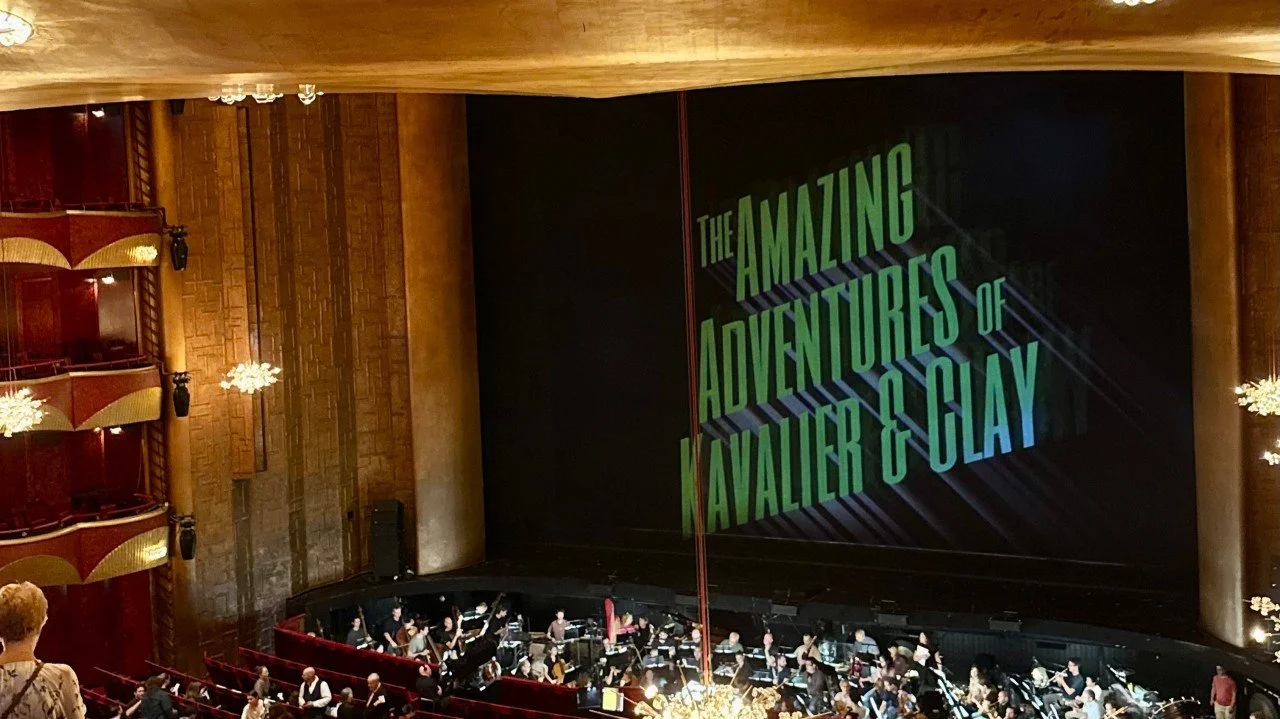
This fall, I was invited to attend the dress rehearsal of The Amazing Adventures of Kavalier & Clay at the Metropolitan Opera — a new work based on Michael Chabon’s Pulitzer Prize–winning novel. The production certainly wasn’t what I expected. It skirted the edges of “opera,” often blurring the lines between cinematic soundtrack, modern musical theater, and classical opera — sometimes in ways that felt almost (but not quite) kitsch. But by the end, I found I had been deeply moved.And I wasn’t the only one. Sitting in the dark of the opera house, unexpected tears welled up. I recognized the quiet shuffling sounds of others around me reaching for tissues, too. One woman next to me was quietly sobbing.
This past year has been one of loss for me. My father passed away last Thanksgiving, and I have been navigating some health issues that are, in their own way, also a kind of loss. But beyond the personal, I’ve also felt grief for a version of New York — and of America — that seems to have slipped away.
That performance tapped into a sense of loss and grief I hadn’t even realized I needed to process. There were moments of joy, beauty, and laughter too. That communal ebb and flow of emotion, shared with the other audience members, brought me comfort in ways I hadn’t anticipated.
I left the theater thinking more deeply about the performance than I have about an opera in a long time. I asked myself: why had this show — one I’d not even planned to see — had such a lasting impact on me?
The piece, performed in that iconic space, surrounded by beauty, music, and many, many strangers, was, at its core, a celebration of storytelling.
As an arts educator, that truth resonates profoundly. Every day I see how storytelling helps young people (and adults, too) persist — how the simple act of shaping a story becomes a way of making sense of life, of the joys and losses of our existence. As arts educators, we are tasked with teaching our youth to tell stories — but perhaps even more so, to hear them. To hear another’s story is, in itself, an act of empathy — a way of imagining what life might be in someone else’s shoes.
In Sapiens, Yuval Noah Harari writes that our ability to imagine things that don’t yet exist — to tell stories — is what sets humans apart. It’s through imagination that we create societies, values, governments, and art — and the capacity to envision the world not just as it is, but as it could be.
That is what I experienced at Kavalier & Clay: not just a work of art, but a testament to our human need to tell stories — to listen to stories, to connect, and to dare, even in our confusion and our grief, to envision a better world. In short, to hope.